Jharkhand Students on the Streets: What Happened in the
Jharkhand Student Protests Explained: Why Thousands of Aspirants Are on the Streets of Ranchi
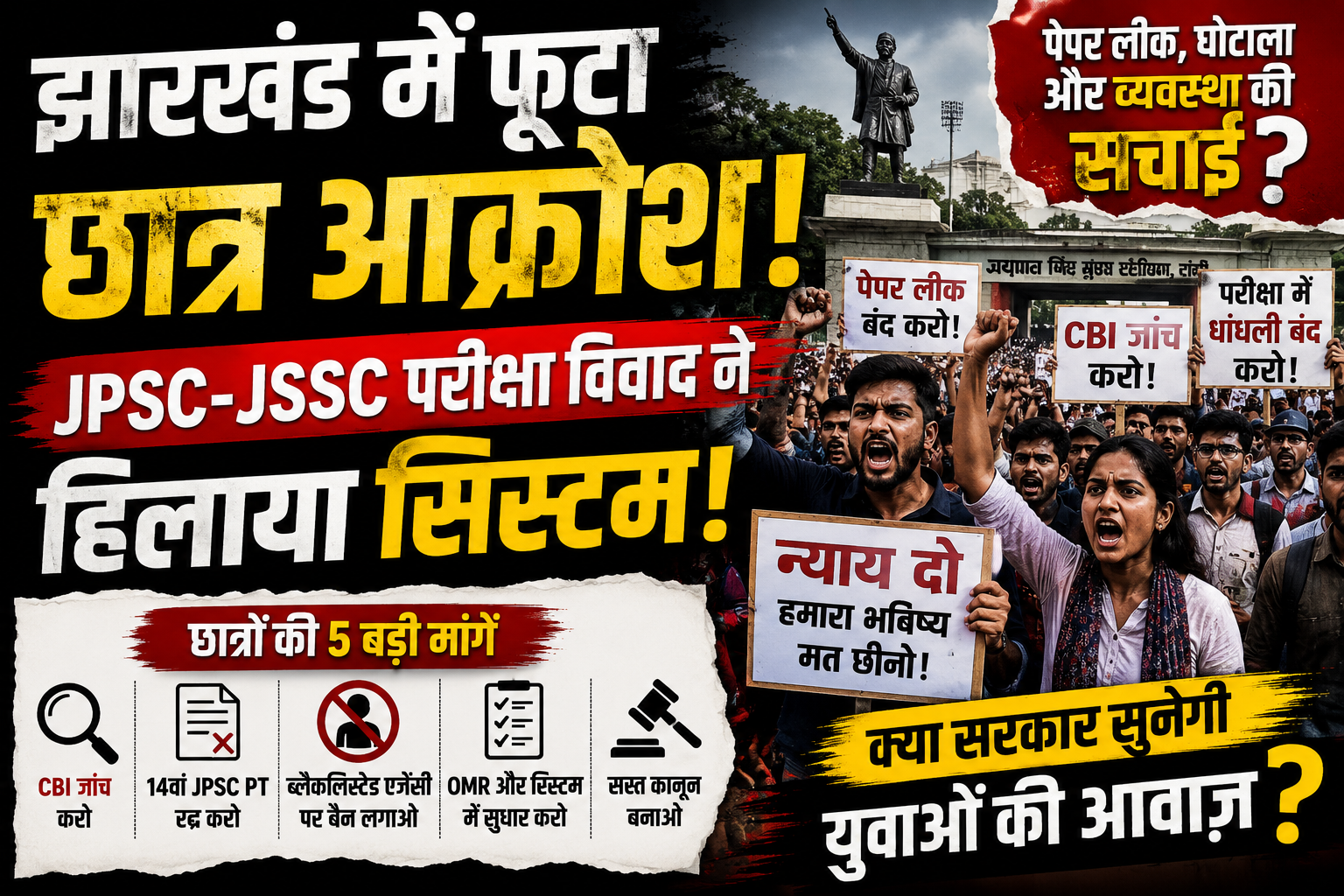
Ranchi, the capital of Jharkhand, has become the center of one of the most significant student-led movements the state has witnessed in recent years. Thousands of competitive exam aspirants have gathered at locations such as Jaipal Singh Munda Stadium, Albert Ekka Chowk, and other key protest points, demanding action against alleged irregularities in government recruitment examinations.
The protests are being organized by student groups and aspirant forums, including the Joint Students Front, and have drawn participants from multiple districts of Jharkhand. The agitation is not limited to a single examination; it reflects a broader crisis of trust in the state’s recruitment system.
This article explains the background, the allegations, the demands, the government response, and the larger implications for public recruitment in Jharkhand.
Why Did the Protests Begin?
The immediate trigger was the controversy surrounding the 14th Jharkhand Public Service Commission (JPSC) Combined Civil Services Preliminary Examination. However, the anger had been building for years due to repeated allegations involving recruitment examinations conducted by both:
-
Jharkhand Public Service Commission (JPSC)
-
Jharkhand Staff Selection Commission (JSSC)
Students argue that delays, cancellations, alleged paper leaks, and lack of transparency have disrupted the careers of an entire generation of job seekers.
The 14th JPSC PT Controversy
The 14th JPSC Preliminary Examination was conducted on 19 April 2026.
After the results were announced, aspirants raised several objections:
-
Timing of result declaration: Students questioned the late-night publication of results.
-
Lack of advance cut-off disclosure: Category-wise cut-offs were allegedly not made public before the result process.
-
Allegations of irregularities: Some candidates alleged manipulation and corruption in the selection process.
It is important to note that these allegations are under investigation and have not been conclusively proven in court.
The controversy intensified because JPSC later postponed the Civil Services Main Examination, which many students interpreted as an indication that the concerns were serious enough to require further scrutiny.
JSSC-CGL and PGT Exams Also Under Scrutiny
The protests are not only about JPSC.
Students have also referred to previous controversies involving:
-
JSSC Combined Graduate Level (CGL) Examination
-
JSSC Post Graduate Teacher (PGT) Recruitment
In these exams, aspirants have alleged issues such as:
-
Suspected paper leaks
-
Unusual scoring patterns
-
Merit list anomalies
-
Lack of transparency in evaluation
Again, these claims have been part of public and political debate, and different cases are at different stages of inquiry or legal examination.
The Outsourcing Question
One of the most repeated demands from students concerns the use of private third-party agencies for conducting examinations.
Aspirants argue that:
-
Exam management is increasingly outsourced.
-
Some agencies have faced controversies in other states.
-
When leaks occur, accountability becomes diffused.
They are demanding that recruitment commissions conduct examinations through more transparent and directly supervised mechanisms.
What Are the Students Demanding?
The protestors have put forward a set of major demands.
CBI inquiry
Transfer investigation of major recruitment leak allegations to the Central Bureau of Investigation.
Cancellation of 14th JPSC PT
Conduct a fresh preliminary examination.
Ban controversial agencies
Prevent blacklisted or disputed private vendors from managing exams.
OMR and transparency reforms
Publish category-wise cut-offs and strengthen safeguards against tampering.
Strict anti-paper leak law
Create stronger legal penalties and fast-track action against leak syndicates.
These demands show that students are seeking not only relief in one exam but also structural reforms in the recruitment system.
The Human Side of the Protests
The most striking aspect of the Ranchi demonstrations is the profile of the participants.
Many aspirants come from:
-
Rural backgrounds
-
Farming families
-
Lower-middle-income households
-
First-generation graduates
For them, government jobs are not merely career options; they represent economic security, social mobility, and family stability.
Stories from the protest sites
Students have spoken publicly about:
-
Spending years preparing for exams
-
Paying for coaching and hostel accommodation
-
Taking loans from family members
-
Facing pressure due to delayed recruitments
One aspirant told reporters that repeated exam controversies have created a feeling that hard work may not be enough if the system itself is not trusted.
Another said that the cost of living in Ranchi while preparing for competitive exams has become a serious burden on farming families.
These accounts help explain why the movement has gained emotional momentum beyond ordinary protest politics.
Government Response: CID Investigation
The Hemant Soren-led government has stated that the allegations are being taken seriously.
Action announced
According to official statements and reported developments:
-
The State Crime Investigation Department (CID) was tasked with investigating the JPSC-related allegations.
-
Multiple individuals, including officials and suspected intermediaries, were questioned.
-
Arrests were made in connection with the investigation.
The government has argued that a state-level investigation is already underway and that action will be taken against those found guilty.
Why Are Students Demanding a CBI Probe?
Many protestors remain dissatisfied with a CID investigation.
Their argument is that:
-
JPSC and JSSC are state institutions.
-
A central agency would inspire greater confidence.
-
A wider network of alleged irregularities could be examined.
However, whether a CBI inquiry is ordered depends on legal and administrative decisions, and such a transfer is not automatic.
Police Deployment and Law-and-Order Measures
As crowds grew in Ranchi, security arrangements were strengthened.
Reports indicate that:
-
Additional police forces were deployed.
-
Barricades were installed at sensitive points.
-
Restrictions were imposed near certain high-security zones.
There were also instances of confrontation between protestors and police during attempts to move toward restricted areas.
Media reports mentioned:
-
Detentions of some protestors
-
Use of water cannons in certain situations
-
Mild force to disperse unauthorized blockades
The administration has maintained that these steps were taken to preserve public order.
Political Reactions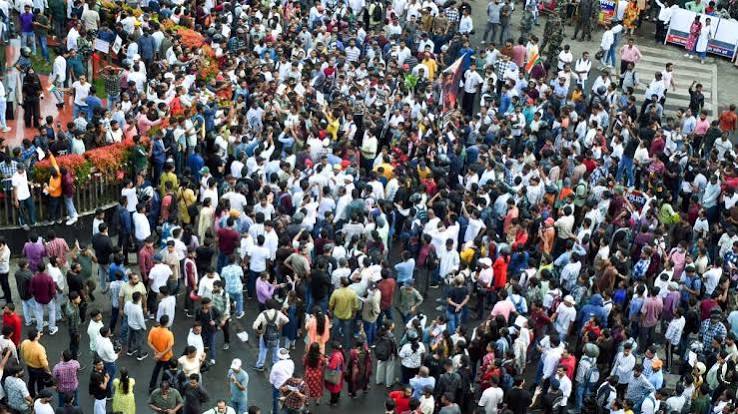
The issue has quickly become politically significant.
Ruling alliance (JMM-Congress-RJD)
The ruling parties have said:
-
The investigation is ongoing.
-
Guilty persons will not be spared.
-
Student concerns should not be politicized.
Opposition (BJP and allied organizations)
Opposition leaders have:
-
Expressed solidarity with protestors.
-
Demanded a CBI probe.
-
Accused the government of failing to ensure transparent recruitment.
As often happens in recruitment controversies, the movement has become both a student issue and a political issue.
Why Recruitment Delays Matter So Much
To understand the scale of frustration, consider the typical journey of a state-level aspirant:
1–3 years of preparation
Coaching and accommodation expenses
Repeated postponements
Exam cancellations or litigation
Age-limit anxiety
Family and social pressure
For many candidates, even a one-year delay can have major financial and psychological consequences.
The Bigger Question: Is This Only a Jharkhand Problem?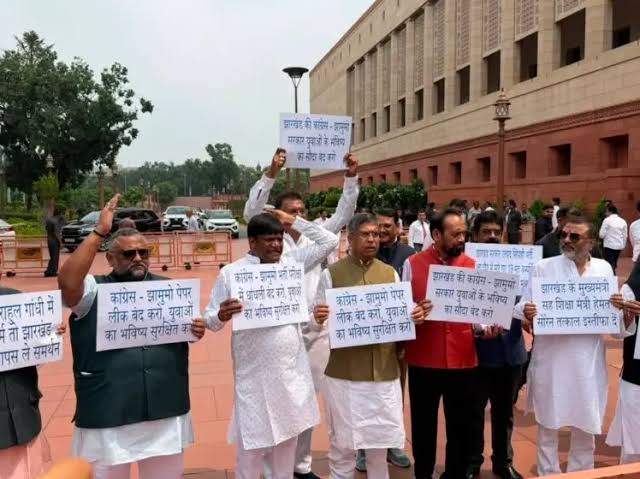
No.
Paper leak and recruitment transparency have become national concerns.
In recent years, several states have faced controversies involving:
-
Teacher recruitment exams
-
Police recruitment exams
-
Graduate-level competitive exams
-
Public service commission examinations
The Jharkhand protests therefore fit into a broader national debate about:
-
Examination security
-
Digital safeguards
-
Accountability of agencies
-
Speed of investigations
-
Protection of merit
What Reforms Could Improve Trust?
Experts in public administration and examination systems often suggest a combination of technological and institutional reforms.
Possible measures
Encrypted question paper systems
Reduce the possibility of pre-exam leakage.
Public release of answer keys and cut-offs
Increase transparency in evaluation.
Independent audit of recruitment processes
Provide external oversight and credibility.
Time-bound recruitment calendars
Reduce uncertainty for aspirants.
Fast-track courts for exam fraud
Ensure quicker accountability and deterrence.
Secure digital OMR and evaluation systems
Strengthen protection against tampering.
Whether Jharkhand adopts these reforms remains to be seen.
What Happens Next?
Several developments will determine the future of the movement:
CID findings
Whether evidence supports the allegations.
JPSC decision on the examination
Whether the PT is upheld or reconsidered.
Court proceedings
Any litigation related to the recruitment process.
Sustainability of the protest movement
Whether students maintain long-term mobilization.
Government willingness for reform
Whether structural changes are announced.
At present, the protests show no clear sign of ending quickly.
Conclusion
The Jharkhand student protests are about far more than one preliminary examination. They represent a deeper crisis of confidence in public recruitment.
For the thousands of aspirants sitting on the streets of Ranchi, the issue is not only about jobs—it is about fairness, transparency, dignity, and the belief that merit should matter.
The government has responded with investigations and administrative measures, while students continue to demand stronger accountability and systemic reform. The final outcome will depend on the credibility of the investigation, the transparency of future decisions, and the willingness of institutions to rebuild trust.
Whatever the immediate result, the movement has already sent a powerful message: in a state where government employment remains a crucial pathway to social and economic advancement, the integrity of recruitment examinations is not merely an administrative matter—it is a question of public faith.
Related Articles

Sijimali Hills Protest Explained: Why Tribals Oppose Vedanta Mining Project
READ MORE →
Indian vs Global Education System: Key Differences
READ MORE →
JEE NEET pressure
READ MORE →
Rajasthan 4th Grade Merit List Cancel 2026: हाईकोर्ट ने चतुर्थ श्रेणी भर्ती मेरिट लिस्ट की रद्द
READ MORE →