Vinit
11 August 2026
Quit India Movement 84th Anniversary, PM Modi Quit India
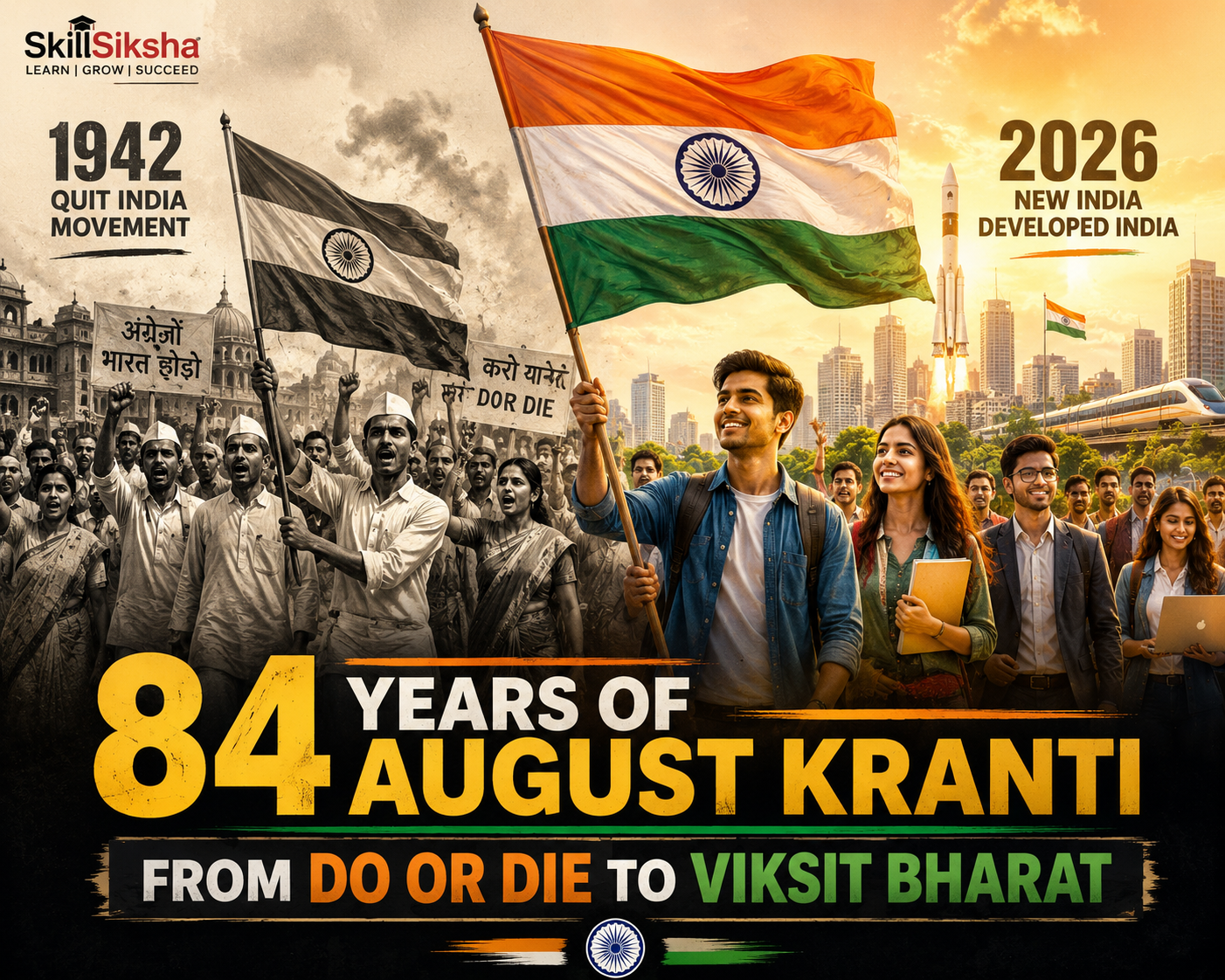
84 Years of August Kranti: PM Modi Pays Tribute to the Heroes of Quit India Movement
By skillsiksha Editorial Team | Published: August 11, 2026On the historic occasion of the 84th anniversary of the Quit India Movement (also known as August Kranti Din), Prime Minister Narendra Modi paid rich tributes to Mahatma Gandhi and the brave freedom fighters whose sacrifices forced an end to British colonial rule.
Commemorating August 9, 1942—a defining watershed moment in
Key Highlights of PM Modi’s National Message
In an official statement and address issued via social media, Prime Minister Narendra Modi highlighted the deep national significance of August Kranti:- Eternal Symbol of Inspiration: PM Modi stated that the immense sacrifices made by millions of ordinary citizens during the 1942 movement remain a powerful guiding force for 1.4 billion Indians today.
- The Leadership of Mahatma Gandhi: Reaffirming Bapu’s visionary role, the Prime Minister noted how Gandhi Ji’s decisive call united the entire country under a single goal—total liberation from foreign rule.
- Reflecting Unwavering Resolve: PM Modi emphasized that the rebellion demonstrated India’s collective determination to break free from imperialism, paving the way for full independence five years later in 1947.
"Remembering all those who participated in the historic Quit India Movement. Their courage will always remain an inspiration for every Indian. Inspired by the leadership of Mahatma Gandhi Ji, the clarion call of Quit India infused new energy into our freedom struggle and reflected the unwavering determination of our people to break free from colonial rule."
— Narendra Modi, Prime Minister of India
Nationwide Celebrations & Commemorations
Across the country, leaders, students, and citizens joined in honoring the martyrs of 1942:- August Kranti Maidan, Mumbai: Schoolchildren, freedom fighters' families, and citizens gathered at the historic Gowalia Tank Maidan in South Mumbai—the original site where Mahatma Gandhi launched the movement in 1942. Tributes and floral offerings were made at the historic Martyrs’ Memorial.
- Parliament Homage: Members of Parliament observed silence to honor the unsung heroes and leaders of August Kranti.
- State Tributes: Chief Ministers across states, including Maharashtra, commemorated the anniversary, noting that the legacy of patriotism shown in 1942 continues to inspire youth toward building a self-reliant nation.
Historical Deep-Dive: What Was the Quit India Movement?
The Quit India Movement (Bharat Chhodo Andolan) was the third major mass movement launched by Mahatma Gandhi, following the Non-Cooperation Movement (1920) and the Civil Disobedience Movement (1930).1. The Historical Background & Immediate Triggers
- Failure of the Cripps Mission (March 1942): Sir Stafford Cripps was sent by the British government to secure Indian support for World War II. However, the mission offered only "Dominion Status" post-war rather than immediate, full independence, which was rejected by both the Indian National Congress and the Muslim League.
- Wartime Economic Distress: Soaring inflation, food shortages, and harsh British wartime requisitions caused severe hardship and anger among ordinary Indians.
- Threat of Japanese Invasion: With Axis forces advancing rapidly through Southeast Asia toward India’s eastern borders, Gandhi argued that an immediate British exit was essential for India’s safety.
2. The Gowalia Tank Resolution & "Do or Die"
On August 8, 1942, the All India Congress Committee (AICC) formally passed the historic "Quit India Resolution" at Gowalia Tank Maidan in Bombay.Addressing the gathering, Mahatma Gandhi delivered a legendary speech where he gave the nation its most iconic rallying cry: "Do or Die" (Karo ya Maro). He proclaimed that every Indian striving for freedom must act as his or her own leader in the non-violent struggle.
(Historical Fact: The phrase "Quit India" was coined by socialist leader and former Mayor of Bombay, Yusuf Meherally).
3. Operation Zero Hour & The Mass Uprising
Fearing an all-out revolution, the British administration struck back swiftly. In the early hours of August 9, 1942, British police launched Operation Zero Hour, arresting Mahatma Gandhi, Jawaharlal Nehru, Sardar Vallabhbhai Patel, Maulana Azad, and the entire top Congress leadership.Despite the arrest of top leaders, the movement refused to die down. Lacking central coordination, it transformed into a spontaneous, leaderless mass movement across urban and rural India:
- Underground Resistance: Young socialist leaders went underground to keep the rebellion alive. Jayaprakash Narayan, Ram Manohar Lohia, Achyut Patwardhan, and Aruna Asaf Ali led covert networks. Aruna Asaf Ali famously hoisted the Indian National Flag at Gowalia Tank Maidan on August 9 amidst police teargas.
- Clandestine Congress Radio: Usha Mehta established an underground radio transmitter ("Congress Radio") that broadcast news of the freedom struggle across the country, evading British detectors for months.
- Parallel Governments (Prati Sarkar): In several parts of the country, patriots overthrew colonial authorities and established independent parallel governments:
- Tamluk (West Bengal): The Tamluk Jatiya Sarkar was formed, featuring an armed women's brigade (Bidyut Vahini).
- Satara (Maharashtra): Led by Nana Patil, the Patri Sarkar functioned effectively for over three years.
- Ballia (Uttar Pradesh): Chittu Pandey led a revolt that briefly ousted British officials and liberated the town.
Significance for Modern India: From 'Quit India' to 'Viksit Bharat'
The Quit India Movement was a crucial turning point. It made it unmistakably clear to the British Empire that their reign over India was no longer sustainable. Just five years after August Kranti, India won its freedom on August 15, 1947.In 2026, as India observes 84 years of August Kranti, the national focus has evolved from liberation to national development. The spirit of self-determination shown in 1942 is directly linked to the vision of Viksit Bharat 2047 (Developed India)—emphasizing economic self-reliance (Atmanirbhar Bharat), social unity, and global leadership.
Quick Exam Revision Notes (UPSC / State PCS / SSC / Army)
| Parameter | Historical Detail |
| Official Name | Quit India Movement / August Kranti / Bharat Chhodo Andolan |
| Launch Date | August 8–9, 1942 |
| 84th Anniversary | August 9, 2026 |
| Historic Slogan | "Do or Die" (Karo ya Maro) – Given by Mahatma Gandhi |
| Phrase Coined By | Yusuf Meherally (Socialist leader & Mayor of Bombay) |
| Primary Venue | Gowalia Tank Maidan (August Kranti Maidan), Mumbai |
| British Crackdown | Operation Zero Hour (Arrest of major Congress leaders on Aug 9) |
| Underground Leaders | Aruna Asaf Ali, Jayaprakash Narayan, Ram Manohar Lohia, Usha Mehta, Achyut Patwardhan |
| Key Parallel Govts | Ballia (UP), Satara (Maharashtra), Tamluk (Bengal) |
Related Articles
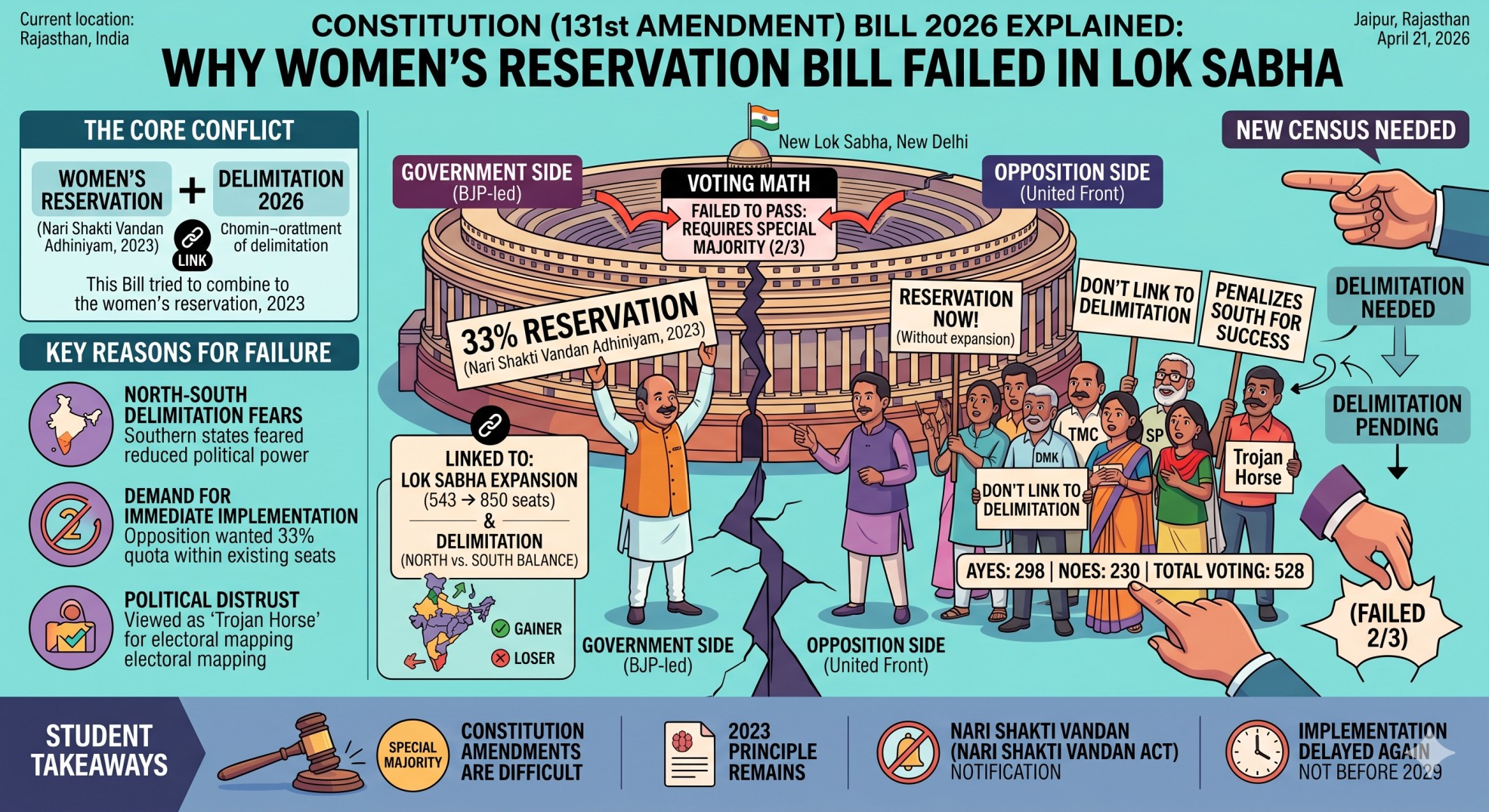
Constitution (131st Amendment) Bill 2026 Explained: Why Women’s Reservation Bill Failed in Lok Sabha
READ MORE →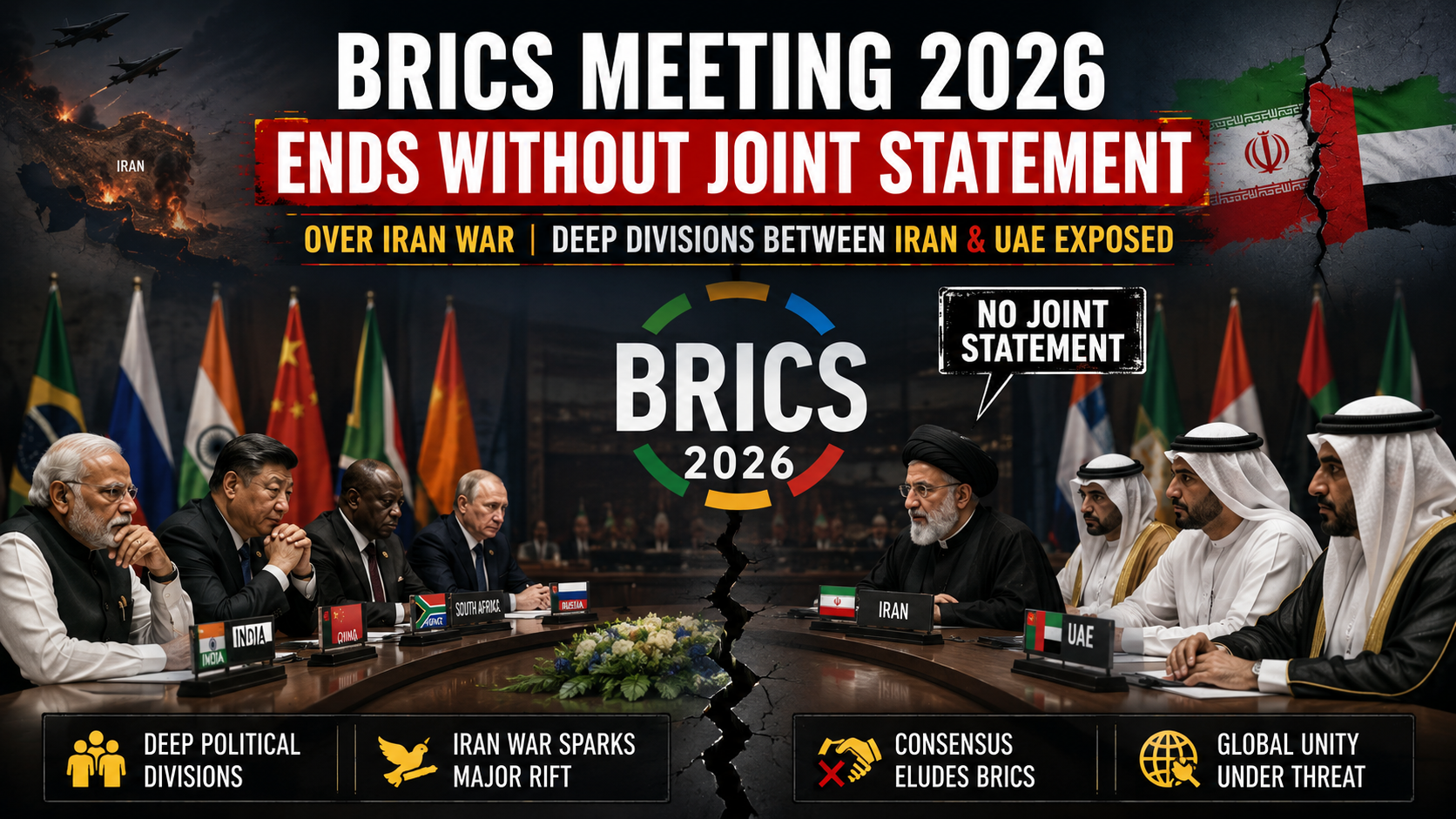
BRICS Meeting 2026 Ends Without Joint Statement Over Iran War | Deep Divisions Between Iran & UAE Exposed
READ MORE →
75 Scholarship Schemes PDF 2025-26 Download Free
READ MORE →
Birth and Death Amendment Bill 2026
READ MORE →
8th Pay Commission : संसद में सरकार का बड़ा बयान
READ MORE →