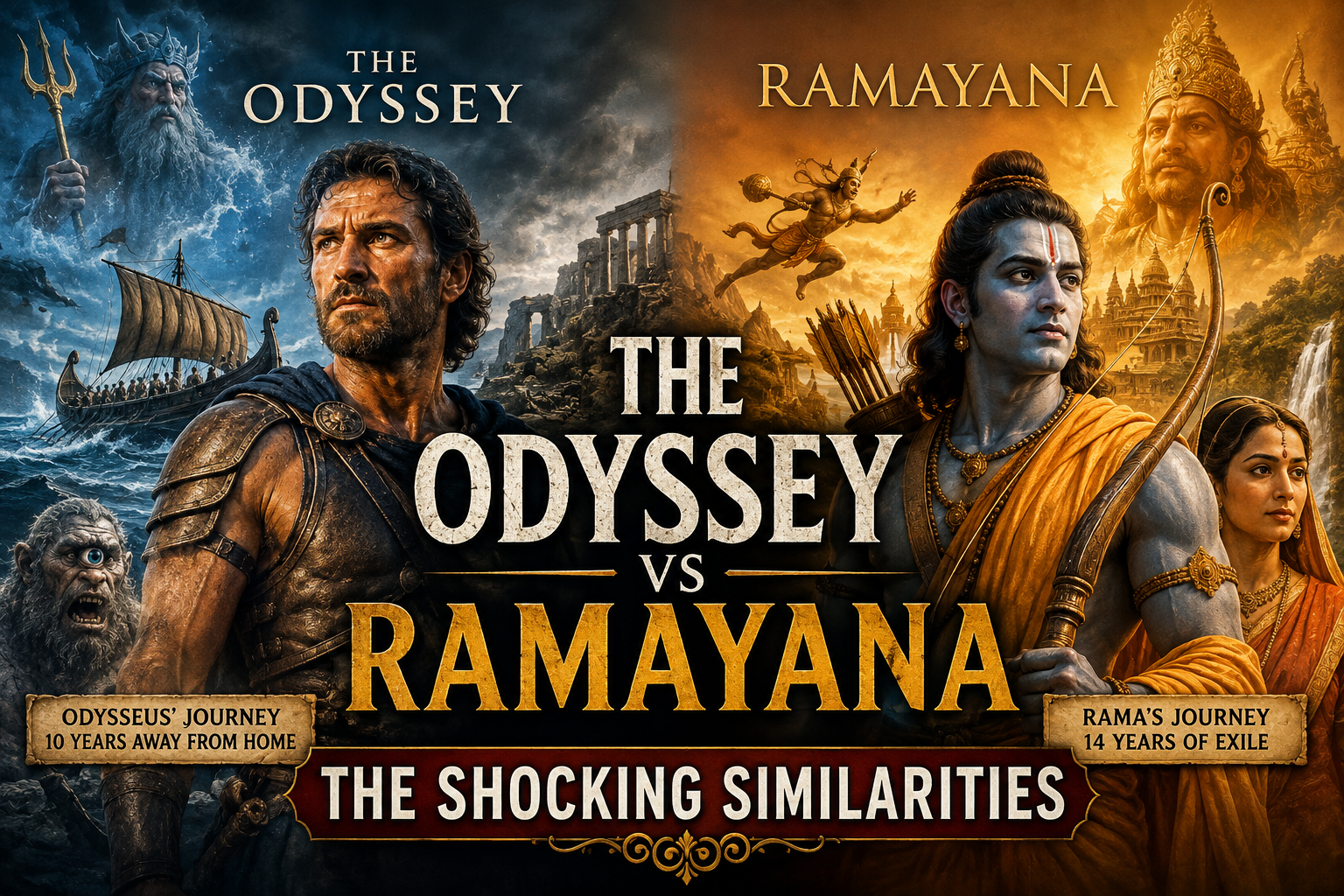
The Odyssey vs Ramayana: The Shocking Similarities
The Odyssey: From Ancient Greece to Modern Cinema — Why the Epic Is Trending Again and How It Echoes Themes Found in the Ramayana
More than 2,700 years after it was composed, The Odyssey is once again at the center of global attention. What began as an ancient Greek oral epic is now being discussed in film circles, literary forums, social media, and even among audiences familiar with Indian epics such as the Ramayana.
The recent surge in interest is not based on a newly discovered manuscript or a rewritten story. It is largely connected to renewed cinematic interest in classical epics, especially the announcement that filmmaker Christopher Nolan is developing a film adaptation of *The Odyssey* for Universal Pictures. The project has generated significant international discussion because it brings one of the foundational works of world literature into the realm of modern large-scale filmmaking.
But beyond the hype, what exactly is The Odyssey? Why has it influenced so much of modern storytelling? And why do many readers notice striking thematic similarities with the Ramayana, even though the two epics emerged from completely different civilizations?
Let us explore the story, the history, the modern revival, and the comparison carefully using historically grounded information.
What Is The Odyssey?
The Odyssey
The Odyssey is an ancient Greek epic poem traditionally attributed to Homer, the same poet associated with the Iliad. Most scholars date its composition to around the 8th century BCE, although the stories themselves likely existed in oral tradition for generations before being written down.
The poem consists of 24 books and approximately 12,000 lines in the original ancient Greek.
The Relationship Between The Iliad and The Odyssey
Think of the two epics as connected but very different in tone:
| Epic | Focus |
|---|---|
| The Iliad | War, honor, rage, battlefield glory |
| The Odyssey | Return home, survival, identity, endurance |
If The Iliad is about winning a war, The Odyssey is about surviving its consequences.
The Historical Background: The Trojan War
The story begins after the legendary Trojan War, a conflict between the Greeks (Achaeans) and the city of Troy.
According to Greek myth:
-
Paris of Troy abducts or elopes with Helen.
-
Greek kings unite under Agamemnon.
-
A ten-year war follows.
-
Troy is finally defeated through the famous Trojan Horse strategy.
Odysseus, king of Ithaca, is credited with devising the Trojan Horse plan in later Greek tradition.
The Core Story of The Odyssey


6
After the fall of Troy, Odysseus sets sail for Ithaca with 12 ships and his crew. The journey should have been relatively short, but it turns into a ten-year odyssey filled with divine punishment, monsters, temptations, and loss.
By the time he returns, he has been away from home for 20 years:
-
10 years at war
-
10 years trying to return
This long separation is one of the emotional foundations of the epic.
The Wrath of Poseidon
The central divine conflict is with Poseidon, the Greek god of the sea.
Odysseus blinds Polyphemus, a Cyclops who is also Poseidon’s son. In anger, Poseidon prevents Odysseus from reaching home by sending storms and disasters.
This is not merely a fantasy obstacle; in Greek thought, it reflects a deeper idea:
Human intelligence may achieve great victories, but it cannot fully control fate or the gods.
The Famous Episodes
1. The Cyclops (Polyphemus)
Odysseus and his men become trapped in a cave by a giant one-eyed Cyclops.
Instead of defeating him through brute force, Odysseus uses cunning:
-
He tells the Cyclops his name is “Nobody.”
-
He gets him drunk.
-
He blinds him.
-
The Greeks escape hidden beneath sheep.
This episode establishes Odysseus as a hero of intelligence rather than raw strength.
2. Circe
The enchantress Circe transforms Odysseus’s companions into swine. With help from the god Hermes, Odysseus resists her magic.
The episode explores temptation, power, and the danger of losing one’s human identity.
3. The Sirens
The Sirens sing irresistible songs that lure sailors to destruction.
Odysseus famously orders:
-
His men to plug their ears with wax.
-
Himself to be tied to the mast.
He wants to hear the temptation without surrendering to it.
This has become one of the most enduring metaphors in Western literature for resisting destructive desire.
4. Scylla and Charybdis
Odysseus must sail between:
-
Scylla — a six-headed monster
-
Charybdis — a deadly whirlpool
The choice is not between good and bad, but between two unavoidable dangers.
What Happens in Ithaca?
While Odysseus struggles at sea, his palace is overrun by more than 100 suitors who:
-
Consume his wealth
-
Pressure his wife Penelope to remarry
-
Disrespect the royal household
His son Telemachus grows into adulthood while searching for news of his father.
The homecoming is therefore not just a reunion; it is a fight to restore order, legitimacy, and identity.
The Recognition Scene and the Bow Contest
Penelope announces a contest involving Odysseus’s great bow.
The challenge:
-
String the bow.
-
Shoot an arrow through twelve axe heads.
None of the suitors can do it.
Odysseus, disguised as a beggar, effortlessly strings the bow and completes the feat. He then reveals himself and defeats the suitors with Telemachus.
This is one of the most famous recognition scenes in world literature.
Why Is The Odyssey Trending in 2026?
The biggest reason is the renewed film interest surrounding Christopher Nolan’s adaptation of *The Odyssey*.
What is officially known?
According to announcements from Universal Pictures and major entertainment publications:
-
The film is being directed by Christopher Nolan.
-
It is described as a mythic action epic.
-
The release is scheduled for 17 July 2026.
-
It is being developed using large-format filmmaking associated with Nolan’s previous work.
At the time of writing, many plot details remain undisclosed, and audiences should be cautious about unverified casting rumors circulating online.
Why Filmmakers Keep Returning to This Story
The Odyssey contains many elements that modern cinema loves.
A flawed but brilliant hero
Odysseus wins through intelligence, not perfection.
A journey structure
Each island becomes a new chapter, challenge, or temptation.
Monsters and spectacle
Cyclopes, Sirens, sea monsters, and gods create visual scale.
Emotional stakes
The story is ultimately about returning to family and home.
These ingredients are visible in films ranging from The Lord of the Rings to Pirates of the Caribbean and many contemporary fantasy adventures.
The Hero’s Journey and Modern Storytelling
Scholar Joseph Campbell identified a recurring narrative pattern called the Hero’s Journey.
Many stages appear in The Odyssey:
-
Departure from home
-
Trials and temptations
-
Help from supernatural forces
-
Descent into danger
-
Transformation
-
Return with wisdom
This structure has influenced countless novels, films, games, and television series.
Comparing The Odyssey and the Ramayana
The comparison is fascinating, but it must be done carefully.
The two epics emerged from:
-
Ancient Greece
-
Ancient India
There is no scholarly consensus that one was derived from the other. However, they share several universal narrative themes.
1. Long Separation
| Ramayana | The Odyssey |
|---|---|
| Rama spends 14 years in exile. | Odysseus spends 20 years away from home. |
Both stories explore endurance during prolonged separation.
2. Loyal Spouses
-
Sita remains devoted to Rama.
-
Penelope remains devoted to Odysseus despite intense pressure to remarry.
Penelope’s famous weaving trick—unweaving her work each night—shows intelligence and resilience rather than passive waiting.
3. The Bow as a Symbol
In the Ramayana:
-
Rama strings the divine bow of Shiva.
In The Odyssey:
-
Odysseus strings his great bow when no suitor can.
In both epics, the bow becomes a symbol of true identity and rightful authority.
4. Restoration of Order
Both heroes return to restore moral and political order:
-
Rama returns to Ayodhya.
-
Odysseus reclaims Ithaca.
The return is not merely personal; it is civilizational and ethical.
Important Differences
The similarities should not obscure the differences.
| Ramayana | The Odyssey |
|---|---|
| Hero is an ideal of dharma. | Hero is clever, strategic, and sometimes deceptive. |
| Strong moral and spiritual framework. | Strong emphasis on fate, gods, and human cunning. |
| Cosmic battle between righteousness and evil. | Struggle for survival, identity, and homecoming. |
Rama is often portrayed as the embodiment of righteous conduct, whereas Odysseus is admired for resourcefulness and adaptability.
What Does The Odyssey Teach?
The epic has survived for nearly three millennia because it speaks to enduring human experiences.
Perseverance
Keep moving even when the journey becomes far longer than expected.
Intelligence matters
Wisdom and strategy can overcome brute force.
Home is more than a place
It is identity, memory, and belonging.
Temptation is universal
The Sirens remain a timeless metaphor for destructive attraction.
Loyalty has power
Penelope and Telemachus preserve the possibility of restoration.
Why It Still Feels Modern
Surprisingly, The Odyssey often feels more modern than many ancient texts.
Odysseus is:
-
Not invincible
-
Not morally perfect
-
Frequently afraid
-
Often grieving
-
Sometimes wrong
-
Constantly improvising
This psychological complexity makes him relatable to contemporary audiences.
Final Thoughts
The Odyssey is not just a story about monsters and gods. It is a profound meditation on war, exile, memory, temptation, family, and the longing to return home.
The current excitement surrounding new film adaptations has introduced the epic to a new generation, but its power does not depend on visual effects. The poem has endured for nearly 2,800 years because it captures something fundamental about the human condition: the struggle to preserve one’s identity while passing through chaos.
And when readers notice echoes of the Ramayana, they are not necessarily discovering a direct historical connection. They are witnessing something perhaps even more remarkable—that civilizations separated by geography and culture can produce stories that ask similar timeless questions:
-
What makes a hero?
-
What is worth waiting for?
-
Can love survive long separation?
-
And after all our battles, what does it truly mean to come home?
That is why The Odyssey continues to live—not only in libraries and classrooms, but also in cinema, popular culture, and the imagination of people across the world.
Related Articles

Dhurandhar Box Office Collection Day 25: रणवीर सिंह की फिल्म ने छुए ₹1081 करोड़, Jawan–KGF 2 पर नजर
READ MORE →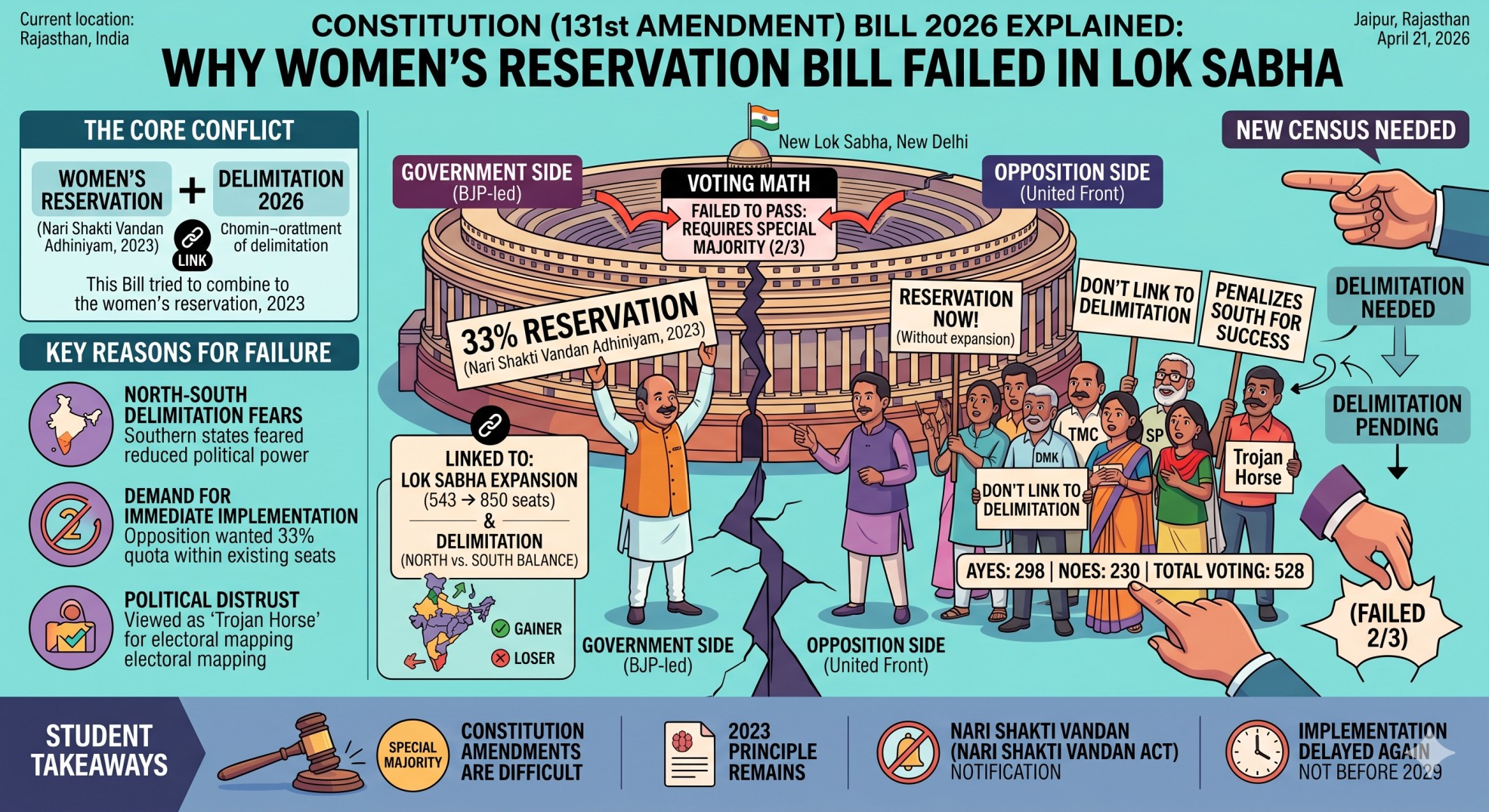
Constitution (131st Amendment) Bill 2026 Explained: Why Women’s Reservation Bill Failed in Lok Sabha
READ MORE →